
‘Stateless’ traces the effects of white supremacy in the Dominican Republic
Stateless uncovers the complex history and present-day politics of Haiti and the Dominican Republic through the grassroots electoral campaign of a young attorney named Rosa Iris.
In this Third Horizon Film Festival interview, juliemango.tv talks with director Michèle Stephenson about the present-day implications of generations of white supremacy in the Dominican Republic and the wider Caribbean.
“The film highlights universal themes of access to citizenship, migration and systemic racism. In the US, we are witnessing the chipping away at immigrants’ and citizens’ rights. We are facing a global crisis of white supremacist manipulation of migrants’ rights, birthright citizenship, and human dignity for black and brown people,” says Stephenson.
Transcript
Robynn Bourne 00:05
Welcome to juliemango.tv. I'm Robynn Bourne. And today we have the pleasure of chatting with Emmy nominated filmmaker Michelle Stevenson about her documentary stateless. The film uncovers a complex history and present-day politics of Haiti and the Dominican Republic through the grassroots electoral campaign of a young attorney named Rosa Iris.
Thank you so much for joining me, Michelle. Thank you. Thank you so much for having me. Alright, let's hop straight into this. So to truly understand the history of the issues you address in stateless, there are a few key facts people should know. Can you talk a bit about how the events of 1937 set the stage for what we see in the film?
Michèle Stephenson 00:53
Well, um, I would say that the 1937 massacre, I can talk about it as one part of a really long historical continuum, on the island and even this hemisphere, I would say, in terms of how white supremacy has signed have kind of taken root right? I can start as early as the island Hispaniola, it is the first place where Europeans arrived, Christopher Columbus sets, you know, his foot there. It is the first place where the genocide against indigenous peoples happened where people were disappeared violently. And it's the first place where the enslaved Africans set foot as well. And so from that moment, on between this legacy of colonialism, settling, set and settler European settlers, slavery and genocide emerged, a racial caste system.
And we see different manifestations of that racial caste system and its convergence with capitalism, from as far north as Canada, which has its own interpretation, right? That it has a legacy with European colonialism to as far south as Argentina. And what centers around all of this is anti-blackness, right? And there are all these variations of how we internalize it as people. You know, for me, all of this runs through my blood. As a light-skinned black woman who was born in Haiti have a Haitian father and a Haitian, and a Panamanian mother. I've sort of navigated through the waters of colorism and what pigmentocracy looks like from very personal perspective.
And so if we come to today and 1937, the massacre 1937 people are not aware it was an act of genocidal extermination by the dictator, Rafael Trujillo, who was put in place subsequent to a US occupation by the military, the US military, for those of us who know sort of the history of us imperialism in the Americas. This is a period where they were had just were, had just occupied Haiti and the united and the Dominican Republic, and left Trujillo in power. And they instilled also certain influences because many of the people who were in the military at the time were from the south of the United States, at the height of the Jim Crow and lynching periods.
So this violence against black and brown bodies is something that we've witnessed throughout the hemisphere. And so through he'll set for to be killed Haitian migrants, their descendants, and in this case, because the, the massacre was so rampant, many darker-skinned Dominicans were caught up in the violence, it was a way of trying to cleanse right the population because through he had a whitening agenda for his country. And so, you know, we were our, our ancestors were sort of caught in that there's not a there's a, we don't know what the total number of people were saved somewhere in the 10s of 1000s. graves are still unmarked, and the state on both sides is still not kind of sort of like taking on the accountability of recognizing and commemorating this Genesis act of genocide, which is part of our hemispheric history of genocide.
Others have occurred in, in Guatemala, we still, you know, today here in the United States, are just recently, you know, coming to terms with the massacre of Tulsa that doesn't come close in terms of numbers to what happened in the Dr. In 1937. So I'm sorry. Giving you a very long-winded thing to tell you that there's an element to the film that sort of incorporates kind of venerating our ancestors and what they went through.
And so fast forward to today, or 2013, the Dominican Constitutional Court. And so so from 1937, it's always been this dance, right, this idea of whitening the Dr. by those in power, right, I want to make sure that we understand that these are elitist Acts, Acts of racial capitalists, who are using who are using anti-blackness to control to keep a labor force that is cheap and invisible, right. And using the trope of anti-blackness and white supremacy to maintain that control. So there are other people, if you go to the border area, you know, there is there has historically always been collaboration and cross sort of cultural community, it's the forces who have power that sort of instill and make sure that the vision sort of continue and come deeper.
And so this sort of kind of manipulation sort of culminates with this Constitutional Court decision in 2013, that really takes things to another level, it renders the mannequins, people who are born in the country who have a birthright to their citizenship to a birth certificate, as in most places in the Americas, there, it's it's, you don't find much blood-related citizenship, although that is also happening. But everybody, wherever you are born, whether it's in Canada, you're born doesn't matter who your parents are, right? Who your grandparents are, if you're born on the land, you are considered of that country or your Canadian citizen, right? Well, this was happening in the DR as well.
But with this decision, they rendered all the children of Haitians really are what they would call transient people who may not have had their documents, no longer citizen, so even people who had their birth certificates, those sorts of things were no longer valid, and they made it. And for you to understand that it's really targeting a population. It's not about everyone who's born there, who's whose family might be transient, you know, there have been many Venezuelans who came to the Dr. Who are not confronted with the same situation, they made it retroactive to 1929. 1929 is a very specific time in history, where, again, through the US occupation of Haiti, in the Dominican Republic, there was an enforcement of the border between Haiti and the Dominican Republic.
So it's very obvious that this ruling is about Haitians and their descendants. And there we can, specifically Dominican citizens. So for me, this act is another form of genocide, right? It's the extreme form of an anti-black violence gesture, where you don't need to commit an act of violence to disappear people to make people invisible, so that they no longer exist. You just use the state apparatus, you don't give them papers. It is not even about being undocumented. It's about a right to citizenship that is torn from from from you. And it's a demonstration of the extreme, you know, state-sanctioned power.
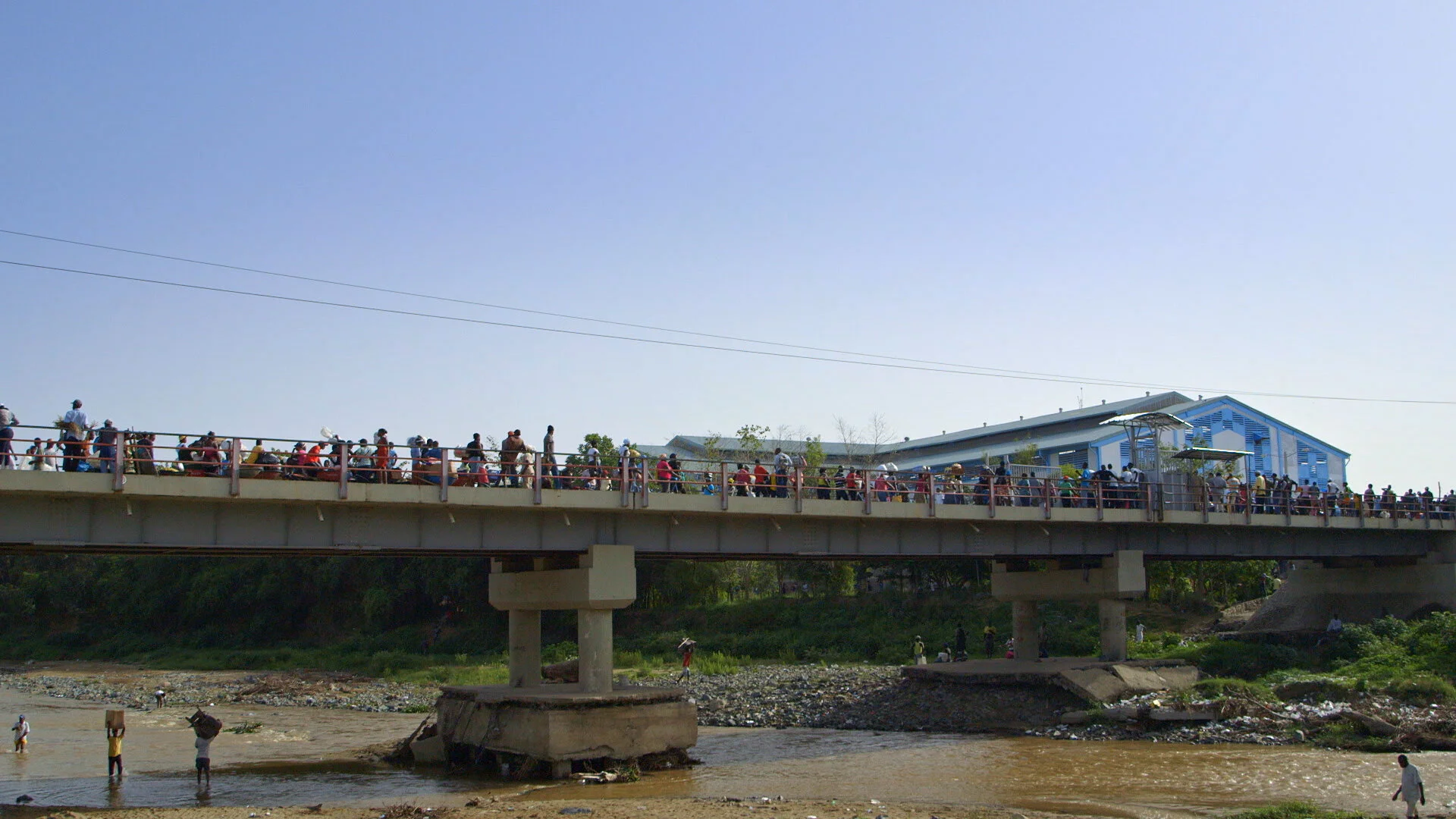
People crossing a bridge at the Frontier between Haiti and the Dominican Republic / Source: Michèle Stephenson
Robynn Bourne 08:18
Wow, sorry, I was I'm honest, already even answer something else I was gonna ask cuz I'm like, it's definitely a lot to take in, especially because of the fact that we don't even hear about this a lot. So seeing it, it's like, we see forms of this happen in different ways. Because when we think about systemic racism, or the denial of citizenship, we don't often think about the Caribbean countries. But I guess like, in your opinion, would you say the truth is hidden from us and underreported in international media?
Michèle Stephenson 08:55
Oh, absolutely. I mean, all black and brown stories are underreported in the national media, because of the dominance of because of the dominant narrative that really helps maintain the status quo of white supremacy. You know, this happens in Canada, also, I mean, we hear about those bodies that was were found recently, of indigenous children. And these things are only now being unearthed. And when it comes to our black and brown bodies, this is we have to push to be seen, right, and to be seen in a way that maintains our full humanity. It's not just to be seen, it's to be seen in, in our full humanity. And that is a very difficult obstacle.
Now, when this when the Constitutional Court decision came down, there was an uproar, you know, an immediate sort of uproar by the international community, human rights defenders, you know, really came down under the Nixon government. The Dominican government responded with very sort of lame sort of legislation that allowed for some loopholes to be, to be to be used where some people could potentially register and get some documents, but never the full kind of full, full-fledged, a re-recognition of the citizenship that these people who are born on that land or do. And with those, you know, sort of minor sort of changes by the government. It's been silenced ever since, in fact, today, we are in a worse situation post-pandemic, right?
This new neoliberal president who's come to power was elected last year has, in fact, started to build a wall between Haiti and the Dr. Which was not done in the past. So and we understand that there are difficulties around access even to vaccinations if you don't have your documentation. So it's the doubling and tripling of the exposure of the marginalization of peoples with this pandemic, that has happened, and this enforcement now have a wall to keep people out that we don't hear about in the main mainstream media, we have to kind of dig through, to find out.
So yeah, and on the other side, you know, we don't hear about as much as we should, in terms of understanding the need for solidarity across these borders of our common experiences, of stories, like Rosa Iris, you know, there are 1000s of black women in the Dominican Republic, making change, or pushing for change, right, some who have actually gone to jail. And the reason why you know, it's very important to recognize that we're all interconnected, both in terms of the battle against these racial capitalist measures. And, you know, also those who practice this ultra-nationalist ideology are also interconnected.
You know, there's a connection between both so now in Brazil, you know, Trump and the GOP and, and with the ultra-nationalist and Dominican Republic, but the stories of societies are really important to be told, in fact, some of the leaders have were put in jail, as recently as after the George Floyd, murder, and the uprisings, for commemorating the death of George Floyd for creating solidarity, these women were put in jail by the ultra-right-wing that called the police on them. So you know, there's a ripple effect. What happens in one place happens in the next and our need to, you know, to create solidarity to recognize our common, you know, battles is really important.
Robynn Bourne 12:51
It definitely is. Haiti definitely has a lot of civil and political challenges. You outlined a lot of them actually. Was there any? Or is there still any support for stateless people that arrive in Haiti? Like, what was the social support? Because I know you did mention the fact that there are many black women out there women of color who are going to jail for this. So what other social pushes were there?
Michèle Stephenson 13:23
Well, I mean, I didn't spend as much time. I mean, there are many social justice movements going on in Haiti right now. Right, related to issues that are going on in Haiti itself. There are movements of solidarity and collaboration. I've worked with an organization, a cultural organization called eswe. They actually composed the lat the song that's used at the end of the credits, is about cross Island, solidarity. And they work together they're Haitians and Dominicans, in performances, and music and the arts, across the borders to create that solidarity.
So there are definitely movements happening, especially among youth, Haitian and Dominican youth, to amplify certain the question of Dominicans of Haitian descent, but more importantly, to push against the stereotypes, right, or the history that are the mythology around Haitian identity or Dominican identity that's being instilled through the educational system, through the media that they hear and even through family members.
So these movements, especially among artists, at least the ones that I've been connected to, are alive and very strong in their performances and their and the work that they're doing both at the grassroots level, but also in larger performances and the music that they create. So that's an area that I know more closely about. I know The people who are involved, and some of those other cultural movements that are happening because when you think about it, we have to change cultural perception.
The laws won't follow if we don't change cultural perception. And that happens over generations trying to kind of how do you say it, remove what we've been taught? Right? What we've internalized is part of this process. So yes, there is work being done on the ground, certainly on the cultural and music and performance. level. And also there are lawyers, both in the Dr. In Haiti working on these issues. That are, they're risking a lot in this process. We just did a are doing a fundraiser called still stateless campaign, that's helping.
If people can look at it hashtag still stateless on GoFundMe, where we're raising money for the lawyers, both Dominicans of Haitian descent, someone were our Haitian migrant attorneys, who are looking to help, you know, get whatever papers are possible, and also to push for the recognition of their citizenship. In the Dominican Republic, so yes, things are happening, things are always happening, right.
And, and it's part of the process, you know, we get, you know, you get kicked you pick up, and you keep doing the work because you have to do the work. It's important, but one thing I do want to highlight is about the story of one of the participants in the film, Juan Theo Philo, who is Rosa Iris', cousin, he is stateless. And he decides, I see him as a modern-day Maroon, who escapes to the mountains of Haiti, not as a refugee, but as someone seeking liberation as a maroon. who escaped the discrimination and oppression that he faces in the Dr. For what to try to build a better place in the mountains of Haiti. So it's a different sort of vision of what Haiti represents in terms of its symbol.
Robynn Bourne 17:16
Since you brought up Juan, I do want to ask a specific question about him. So he was ripped apart from his children. He his story was really actually very heartbreaking. Can you talk about the long history of inaccurate birth records enabled by the government to kind of enforce that unjust cancellation of the national documents? Can you talk about that?
Michèle Stephenson 17:40
Yeah, I can talk a little bit about I mean, I don't know the specifics. But what I do know from sort of a bigger picture thing is, the way these things are constructed in the bureaucracy is literally CAFCA-esque, right? They will create whatever obstacle they can to stop people from being empowered through the state apparatus. What does that mean? They make it expensive, right? Firstly, make it expensive. Firstly, make it that you have to travel, right? We don't come to you, you got to come all the way over there, you have to pay for that trip.
How do you pay for that trip, when you're basically making only a subsistent level of income. There are all these barriers that are instituted by that are seemed also like, ‘Oh, I'm inadequate because I can't get there.’ It's, it's hard to even make the systemic critique because it goes so deep, the system is constructed, so that you don't get the recognition that you need to, to be full, a full citizen and fully empowered. So some were able to get their, their birth certificates through the kind of perseverance of their parents, others parents, were not able to, but they were born on that land.
You know, Teofilo was actually one of the luckier ones he was, he was able to get more education. He has a he's, he's had some years of college. He had parents who were able to get a birth certificate for him, which was enough, eventually, and he even had a password it was able to travel. But the effort that he had to take in order to get those papers was pretty astronomical. It's not you, the average person cannot have access in that way. And that goes even for Dominicans, as well, Dominicans of Dominican descent to it is not an easy process. And it's made that way, right. It's made that way to maintain power and, and control.
Even more recently, so we've been we've tried to help Teofilo to see what papers he can get. And at every moment, he goes to the building to the office. There's another obstacle that's presented and you have to pay for that and it's not it's it's not chump change. You have to pay To get a more accurate birth certificate, you have to pay to correct this you have to pay the trip to go to wherever the places where your mother was born to go to those records to get the accurate paperwork. So it's machinery.
Robynn Bourne 20:20
I couldn't even imagine having to go through half of that. I have the luxury of any documentation that I need. My father has it. It's stored in a briefcase, it's safe. I live in Canada, if I need to go get documents change, yes, I might complain about having to line up in service Canada's line for like 30 minutes, but I couldn't even fathom having to go through that.
And those are people fighting for just belonging in the place where they were born. They didn't even have the choice of where they were born, but it's completely stripped away from them. Anyways, it's definitely very ridiculous to think about. And again to watch because we see it. So Rosa, Rosa Iris, she's actually Juan's cousin. So she's the main subject of this film. She spent 15 years as a community organizer before she was invited to run for Congress. How was she first introduced to you?
Michèle Stephenson 21:16
I met Rosa Iris. through, you know, I had done some work. Speaking about Dominican and Haitian collaboration work that's been happening. For decades, actually. I had been, I had befriended some of that collaboration that was worked out that was happening during the earthquake in Haiti. Four weeks after the earthquake happened, I got some funding through black public media here in the United States, to kind of document what was happening on the ground in these short films that don't have anything to do with international aid, or international assistance, but really more looking at Haitians helping other Haitians and Dominicans of Haitian descent who are coming to Haiti to help as well as Dominicans of Dominican descent.
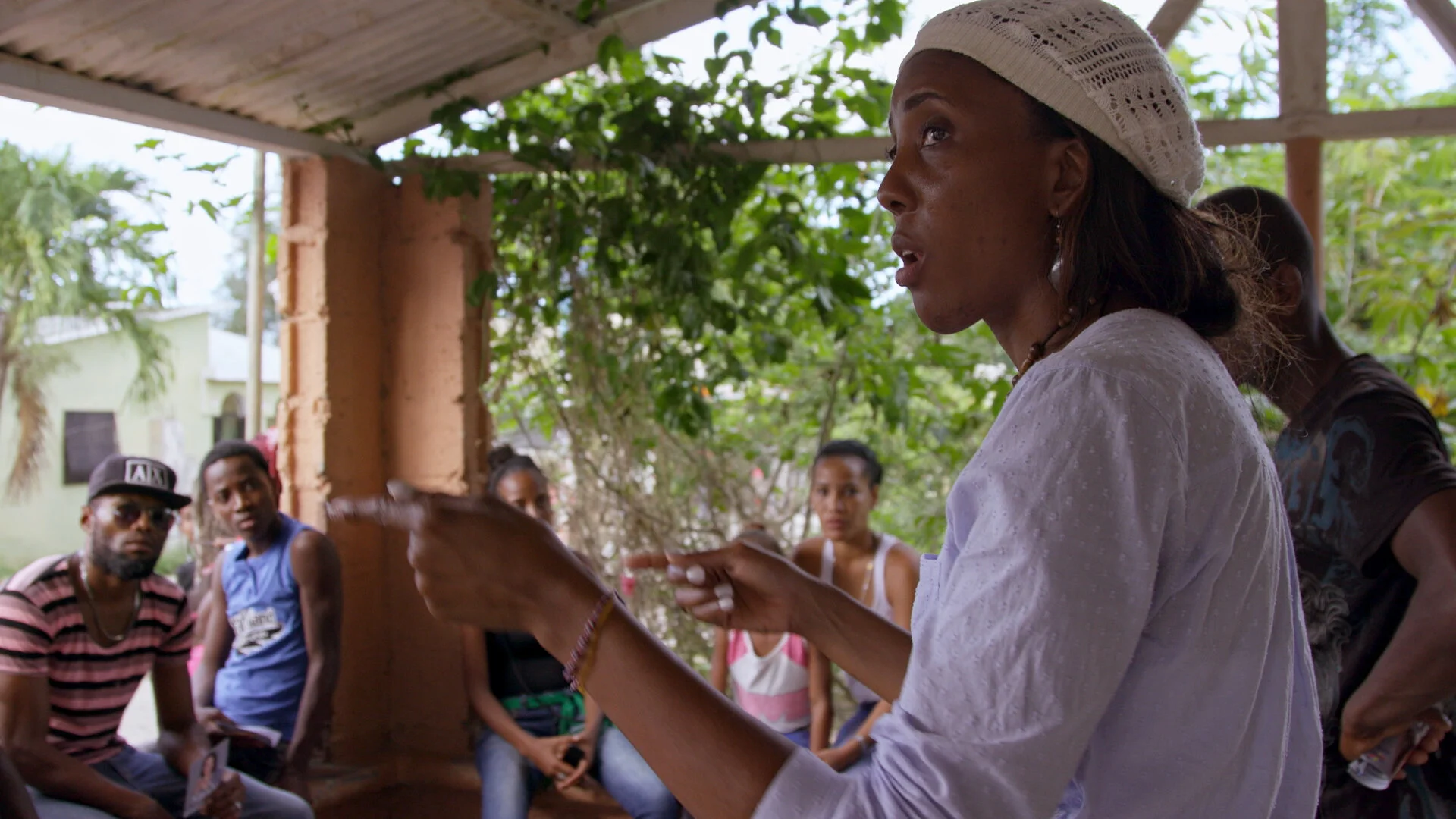
Rosa Iris on the Campaign trail / Source: Michèle Stephenson
And I connected with some organizations that are based in Santo Domingo who were doing this collaborative work both in terms of helping rebuild parts of Haiti and again, confront and, and break down the stereotypes that exists from both sides of the island. And so through that network, I met an organization called eco no see, though, which is based in Santo Domingo.
It's run by Dominicans of Haitian descent. And it's, you know, its mission is to defend the rights, the human rights of Dominicans of Haitian descent, and it was the 80s was working with that organization. In the function of her legal work, again, to help the Dominicans of Haitian descent, go through this quagmire, even before the 2013 decision there, it was still difficult to get papers, and she was helping people from the different sugarcane communities and elsewhere in the city as well to gain their documents. And so when I was talking to the head of the organization Ana Maria, Billy Kay, she mentioned a couple of people that we ended up connecting with of whom Rosa Iris when I met with her in a law office and some of the McAleese and went to the buffet with her and basically just fell in love with her affect with her openness with how vulnerable she is, but also with her rootedness in the community, you could obviously see that there was not just a love for the community, but there was mutual respect and mutual understanding that we could really try to up you know, unpack and reflect in the film.
And she became, you know, an amazing partner on this journey. It took about five years to do this film. In both the shooting and the cutting, and this was there at the front. We didn't know she was going to run for office. I don't think she did when we first met she was doing she was just doing her work. And then she was approached by the party that eventually sort of joined and they invited her to run for a congressional seat for her municipality, Consuela, which is in Santa Margarita.
Robynn Bourne 24:15
Okay, and I was just actually about to ask how long you were with Rosa during the production. So five years you said.
Michèle Stephenson 24:22
Overall, it's about five years. Yeah, we did our research in 2014. The decision came down in 2013 started our research in June of 2014. Before we picked up the camera, I met her at the end of that year, and we started shooting in 2015 and 20. But now we're on the road and it's wonderful to see the momentum that the film is gaining. I think there are a number of things happening that are converging in this way.
You know, we at Rada Studio the work that I do with my partner here at Rada Studio has always been around You know, stories of black and brown communities for us, by us about us, you know, with our audience in mind, but I feel and stateless is that it is an extension of the movement and storytelling work that we're doing.
But I think in a post-George Floyd world, we have to recognize what that violence has done. And it has, it has opened up a whole kind of way of seeing the work that we do that I hope, you know, leads to more dialogue, certainly, within the Caribbean and Latin x community where there's a lot of work to be done to unpack the impact of white supremacy on our communities and of colorism and pigment autocracy on us.
Robynn Bourne 25:44
Yeah, I definitely do feel like I don't know. Okay, so I'm just going to bring up a conversation that I saw on Twitter, just because it does fall along these lines. A lot of the times when there are conversations about oppression, slavery, of white supremacy, it's focused in America, like just the USA, but people forget that no, Christopher Columbus and all his little friends, they went everywhere.
So I like that you bring that up because it's definitely something to think about. Although Yes, in those in the Caribbean, and in Latin America, you will see a lot more colored people. But that does not mean that white supremacy does not exist, because even though there's less of them, maybe they have higher power. So it's, it's ignored.
And I hate that there's a kind of fight between American black people and diaspora black people. I won't just say Caribbean, I'll say diaspora. I hate that there's a fight because it's the same fight. We're both trying to get the same sort of recognition.
Michèle Stephenson 26:54
It’s not that simple. We come from the same history, this history of enslavement, you know, and, you know, to set the record straight, straight also, in some ways, more enslaved Africans arrived in Mexico than in the United States, more enslaved Africans arrived in Brazil, you know, there's a saying in Brazil, that says here, we don't have the racism, the black man knows his place. And in that sense, is that it's not to say that white supremacy doesn't exist in the Americas. It's that its manifestation. Sometimes it's so deep, you don't need Jim Crow.
You know what I mean, you don't need violent oppression, even though while oppression still exist, correct. But we internalize things to such an extent that there's an there's a, there is a knee-jerk reaction to how we maneuver, even within our families, with our neighbors with a society that maintains these pillars of white supremacy. And it's, it's a and I'm glad you bring that up, because it is the same, it is the same fight. And it is the same suffering. And it's also in different ways in different ways. It's but it's also the resistance to the history of the resistance is there, right?
A link is of Colombia, the maroon societies of Colombia, of resistance is there and we should know about it, we should know about that. How they resisted, right, and what they've created for themselves, as well as the Lambos of Brazil, the Maroons of Jamaica, all of that. And the Maroons here in the United States, and we don't hear much about, you know, people who escaped to Mexico didn't escape to Canada, right?
There are black folks who escaped to Mexico, because Mexico had banned, you know, slavery much before the United States. And all of that history interconnects us in the same way that, you know, Haitians were here in New York City, before the Civil War, fighting abolition, right. So there is this interconnectedness of the diaspora, as you say that we're only scratching the surface of right now that is so important even for us to recognize our past and to you know, and to better understand ourselves in this in this battle because the battle is a narrative. It's a battle of narratives, a battle of, of history, of how we see history. And how much can we unearth to push against what's been indoctrinated into us?
Robynn Bourne 29:35
Because there's so many things that we don't learn. Yeah, especially in the education system. You only learn like you, you're from Canada. So you learn the great things about Canada and all the things that were builds and you don't really hear too much about how bad those residential schools really were. You don't hear about the oppression and people have this idea that even now Canada is a place with no racism. And I'm happy that 2020 and 2021 are really proving that narrative wrong. Because not only is it rooted here, but it's growing here.
Michèle Stephenson 30:16
Absolutely, though. I mean, the recent study about the white supremacist, social media language is coming from Canada. It's coming from Canada and I can speak to personal experiences that our families, our families Went, went through as a result of, you know, who we were in, in these different cities in Quebec, but also that, you know, slavery existed also here. I mean, it's not, but we need to learn that.
But somehow, yeah, it's. And that's where it has to start, which is why I felt that in this film, while it's not a history lesson, right? There is an aspect of history that's, that's integrated into the film from a magical realist lens, you know, we learn about sort of the resilience of one particular woman what I may a young woman who tries to escape the massacre in 1937. I won't tell you how it turns out, actually.
Robynn Bourne 31:20
I'm gonna ask you about it in a couple seconds. Okay.
Michèle Stephenson 31:26
But she becomes sort of this protectors spirit, you know, today for young people fighting the good fight. And it's also recognition of the shoulders, you know, on whom people like Rosa, Ed stand in their work.
Robynn Bourne 31:44
So I do want to talk a little bit more about Moraime, they say that right? Yes, you did. Yay. Yes. So the magical realism that keeps popping back up in this conversation, we see it through the storytelling of Moraime’s story. It has a heavy water symbolism, which is something that I see a lot in Caribbean folklore, actually. So how did the massacre river that splits the island play a role in the escape for these victims?
Michèle Stephenson 32:17
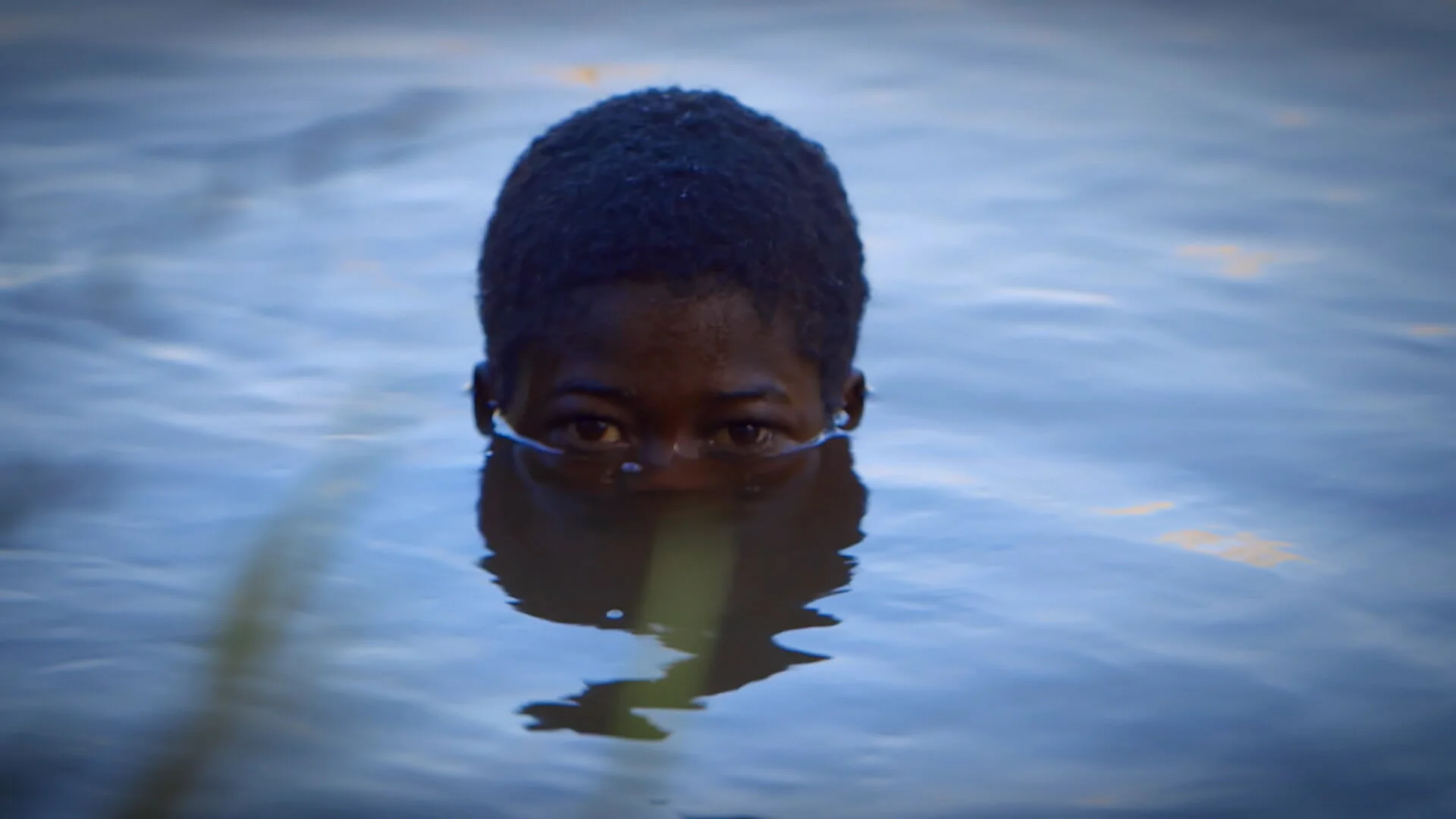
Oh, that's a very kind of, like, complicated answer, in the sense that the massacre river really exists, there is a massacre river, it's called the massacre River. But it's saying that for historical reasons, not because of this particular massacre that has to do with battles between pirates and, and other forces, back under colonial times, but um, the, the recollection, the collective memory around 1937 is that you have to cross the river. It's sort of kind of like, when the massive Ricker river sort of divides the two countries in this kind of natural way. It's part of what it's been deemed to be the border.
Source: Michèle Stephenson
And so knowing that if you cross it, you're on the other side, you're in safe territory, you're in Haiti, was part of the mission of many people were trying to flee, they would flee at night, they would flee and hide in the woods and get to the water and get across. But it was also according to collective memory. And somewhat people said was a place where bodies were, were, were tossed.
Oh, there's conversations about in certain parts of the river, they turned red, right from the blowing of the massacre that took place there. But this idea of water and water being both a, you know, a site of cleansing and read and of cleansing, which happens, you know, in many of our traditions, but also, in this case, a place of tragedy to, um, it kind of lives in both those spaces.
Robynn Bourne 34:09
Gosh, is definitely very, very, very heavy subject. And we've only as much information as you've given me, I know that it goes so much deeper, we've only scratched the surface. So I definitely encourage anybody who's watching this to watch and really take it in because it's a part of history that we don't hear about enough.
And I am thankful for this. I'm actually probably gonna watch it over because just to take in more because everything that we've talked about now, just knowing that while really taking in the rest of the film and taking in everything with a more understanding behind it, I do think is going to be very beneficial for me and as well, our viewers.
But although I would love to sit here all day, I want to know more about what you have planned next. And I always ask everybody, and if you want to give me a little secret, don't worry, it will be just for Julie mango TV, you won't have a body.
Michèle Stephenson 35:20
Well, there are a number of projects that I'm currently working on. And you know, in partnership with my creative partners, also my life partner, Joe Brewster here at Rada studio, I'm on a, I'm in the process, we're working on a biopic on the poet, Nikki Giovanni, we just recently are coming out of Tribeca 2021, and actually won an award there for our virtual reality project called The Changing Same.
This is Episode One of a trilogy that we're doing. And the changing same. Again, I'm back into the magical realist mode is a magical wheel is time travel, actually through racial terror in America. And it's time, these time capsules, and you're connecting history with what's going on today. And the reality today in our in the United States, which I'm sure everyone could relate to quite, quite strongly. And it's called the changing same and American privilege, pilgrimage.
And it's Episode One, the dilemma and we're raising money to do the following two episodes of the trilogy. So that is sort of taking up quite a bit of time for us and the process. But I do have another sort of personal project that I'm just at the start of which has to do with my grandmother, and the Caribbean again. But even going more deeply into the way colorism and pigmentacy works in families through her. She's someone who was originally from Panama, but traveled the Caribbean, and has a very kind of as a very rich story in terms of how she ended up landing in Haiti that I'm looking to share.
And I'm still trying to figure out how I'm going to excavate it, will it be more of an experimental sort of hybrid piece, but it will definitely be centered around women, of course, but really looking at you know, the price we pay that you know, colorism does from a very sort of personal perspective. And so I'll be unearthing some family taboos. But I think it's really important as an artist, when we tell our stories, you know, you know, the systemic is very personal. And if we don't kind of face it internally, and engage with it, in our practice, even you know, even in the work that we do here at Rada, we try to engage in a practice that as collaborative as we try to dismantle, right.
But part of the dismantling, in as an artist is also just this, this dismantling, and rebuilding ourselves in a different way, right, and ending the trauma that we carry that's intergenerational, and that comes from this colonial racial caste system. And how do we deal with that? And so for me, it's important to sort of excavate that for myself, but also to kind of leave something intergenerationally that has, yeah, more of a sense of healing, right? In terms of things that I pass down, you know, even to my children, but also, you know, exchange with other people you want to, you want to kind of cut that energy and create an energy that's, that's, that's, that's healing.
Robynn Bourne 38:50
I love it, those two projects actually sound like they're really gonna blow me out of the water, this low production period for you, I'm giving you all the positive energy because you got a lot going on. Also, I want you to mention where people can donate because you did bring up donations for the episodes so you can launch the second one. So if there's anywhere that we can donate if you want to just say the website or we can drop the link, let me know.
Michèle Stephenson 39:18
Yes, for The Changing Same you could go to our website, radastudio.org, we have a Patreon page there as well. In terms of you know, we'll be in the midst of raising money for the two other episodes. And I'd love to at some point you know, maybe we'll come to Toronto the virtual reality experience so people can see episode one experience it. Join our newsletter, Rada Studio newsletter to stay up to date also with what we're doing.
Robynn Bourne 39:48
All right. Thank you, Michelle, for your heartfelt film and for chatting with me today. I learned so much more than I even thought I was going to you gave such an in-depth description and answers to all my questions. And it's kind of prompted me to want to do even more research about not just about Haiti, but about the oppression in the Caribbean and that what's deep-rooted in our history that we don't even know about. I'm Jamaican. And I feel like I should know a little bit more about that, too. So thank you so much for this great conversation with me today.
And to our viewers. Thank you for watching juliemango.tv. Subscribe for more conversations with Caribbean filmmakers. I'm Robynn Bourne and I will see y'all next time.
