A Guide to the 2021 Third Horizon Film Festival
Photo Credit: Third Horizon Film Festival 2021 promotional video
The 2021 Third Horizon Film Festival is fast approaching – from June 24 to July 1, 2021 the mostly virtual festival brings you its “biggest program yet” with a slate of 14 feature films and 46 short films from the Caribbean and African Diaspora.
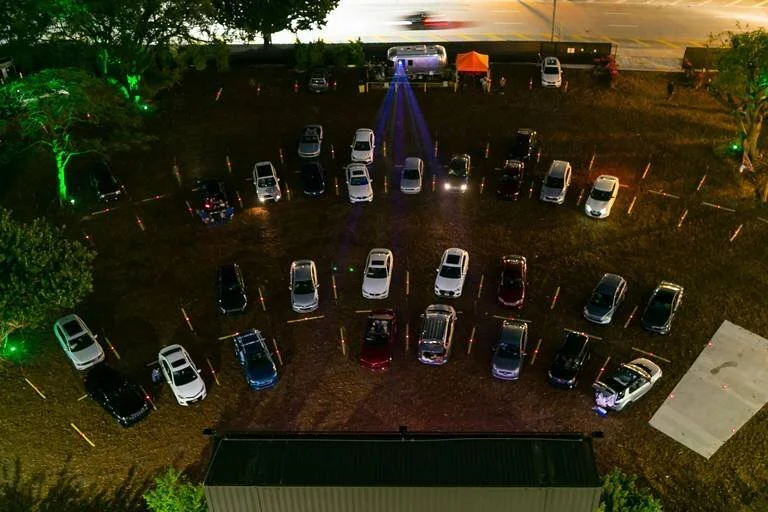
The hybrid festival allows for worldwide access to the majority of titles on show from a computer, Amazon Fire TV, Roku or Apple TV or smart TV, with select films blocked in certain locations to honor the filmmakers’ plans for their work, and others available at in-person screenings in Miami at the Nite Owl Drive-In and Pérez Art Museum Miami.
Films in the virtual cinema are available for viewing for up to 3 hours, and the clock starts ticking at the scheduled screening time.
The THFF 2021 mission statement outlines how the festival is using its programming as a means of showing solidarity and alignment across diasporas. In their own words:
We believe, deeply, that we must harness our shock from the harrowing events of the past year and transform it into the epiphanies and practices that create the future that frees us. However, our moves towards a liberated, regenerative existence in which the marginalized people of the world are no longer abused and exploited will only be successful if those of us scarred by colonialism seek community with each other, whether we find home in Guyana, India, Haiti, New Orleans or Palestine. We hope our festival this year invites our audience more deeply into this communion, through precarity to find potential.
Still from Out of Many/Photo Credit: Rebecca Williams
What we’re excited to see
(Click the title links to watch the film’s trailer and grab your ticket)
Nymph (directed by María del Mar Rosario, Puerto Rico) – Pressured by her economic situation, a newly arrived immigrant in New York enters a world of embellished sex work.
Citric Acid (directed by Elenie Chung, Trinidad & Tobago) – Aino and Yu Xing are best friends and working fine artists. Competition is as natural as intimacy between the two, but their relationship may be heading toward a breaking point.
Mada (directed by Joseph Douglas-Elmhirst, Jamaica) – In rural Jamaica, where isolation carries its own sound, a simmering conflict in a family surfaces and reveals two mothers’ conflicting natures and notions about love and protection.
Motherland (directed by Ellen Evans, United Kingdom) – Motherland explores the personal accounts of those who have had their British identity questioned by the state, tracing what it really means for someone to “go back home”.
Artifact #3: Terra Nullius (directed by Kearra Amaya Gopee, Trinidad & Tobago) – An exploration of how migration and memory affect manifestations of the Anglophone Caribbean family from the pre-Independence period to the present, the film uses the filmmaker’s own family history as a point of reference.
Home Soon Come (directed by Hope Strickland, United Kingdom) – A part of an ongoing project with the elderly Caribbean community in south Manchester, the film explores diasporic movements, memory-placing through domestic objects, and what it means to find ourselves at home in the people around us.
Mano Santa (directed by Steph Camacho, Puerto Rico) – When healer Don Isidoro gets a visit from his grandson Pablo, he learns something about his grandson that makes him recognize that he must accept the things he cannot change, and in doing so illustrates the true meaning of human understanding and sensitivity.
Timoun Aw (directed by Nelson Foix, Guadeloupe) – While being chased, Chris discovers on his stair landing a baby who seems to be intended for him. Doubtful of his paternity, he sets out to find the mother of the child.
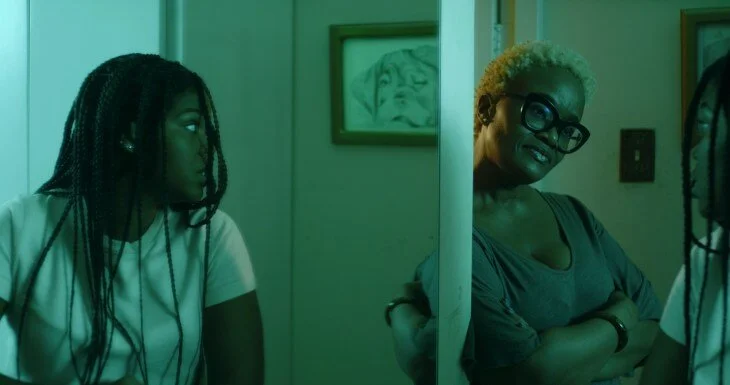
Out of Many (directed by Rebecca Williams, Jamaica) – Asha, a teenage girl from a politically involved and influential family within Jamaica, enjoys a life far removed from the island’s harsh reality. Asha’s privileged bubble pops, however, when she and her driver come across the dead body of a local street cleaner.
No Entry (directed by Kaleb D’Aguilar, United Kingdom) – Against the backdrop of the Windrush scandal, a Jamaican mother, Valerie, keeps the threat of deportation a secret, while her psychological state begins to deteriorate and she grapples with the fear of losing her son and the country she calls home.
Doll Thomas (directed by Ashanti Harris, Scotland) – is a document of artist and filmmaker Ashanti Harris’ research into the historical relationship between Guyana and Scotland, and the hidden legacies of a female diaspora through the complex and extraordinary life of Doll Thomas.
Pattaki (directed by Everlane Moraes, Cuba) – In the dense night, when the moon lifts the tide, beings trapped in the daily life of water scarcity are hypnotized by the powers of Yemaya, the goddess of the sea.
She Paradise (directed by Maya Cozier, Trinidad & Tobago) – Seventeen-year-old Sparkle discovers a free-spirited soca dance troupe and the exploitative side of the entertainment industry. Eventually, she must decide if she’s willing to do what it takes to achieve ultimate success.
Stateless (directed by Michèle Stephenson, Haiti) – In 2013, the Dominican Republic’s Supreme Court stripped the citizenship of anyone with Haitian parents, retroactive to 1929. In this dangerous climate, a young attorney named Rosa Iris mounts a grassroots campaign, challenging electoral corruption and advocating for social justice. As Rosa balances her congressional run with her dedication to her family and community, the full scope of her fight is revealed.
Right Near The Beach (directed by Gibrey Allen, Jamaica) – After the death of famous runner Jeffrey Jacobs, the Jamaican public becomes enamored with the details of his life and speculates as to the motivation behind his murder. The film challenges us to contemplate the anguish of loss while everyone else debates the value of one person’s life.
To view the full list of films showing at the 2021 Third Horizon Film Festival, visit their Film Guide.
Ariel view of the Nite Owl Drive-in/Photo Credit: Matias J. Ocner
In Miami
If you’re in Miami and want to attend both in-person and virtual screenings, tickets are sold separately.
On opening night, at the Nite Owl Drive-in, screen Liborio and attend the Opening Night Party. On Saturday, June 26, screen Stateless at the Pérez Art Museum Miami, and attend the panel discussion that follows. Later that evening, the festival offers a Warm-Up Lime before the screening of She Paradise and Studio 17: The Lost Reggae Tapes at the Nite Owl Drive-in. Then on Thursday, July 1 screen Bantú Mama and attend the Closing Night Party at the Nite Owl Drive-in.
Tickets
Festival passes are available for films and programs in the virtual cinema at $75. And you can purchase individual films or short film programs in the virtual cinema for $5. Exemptions apply for geo-blocked films and in-person events. Learn more about ticketing and viewing in the Third Horizon Film Festival FAQ.