
How ‘Babylon’ Fought Oppression To Remain A Bridge For Caribbean Cinema
This hard-charging Caribbean-British film became a cult classic despite the resistance from babylon.
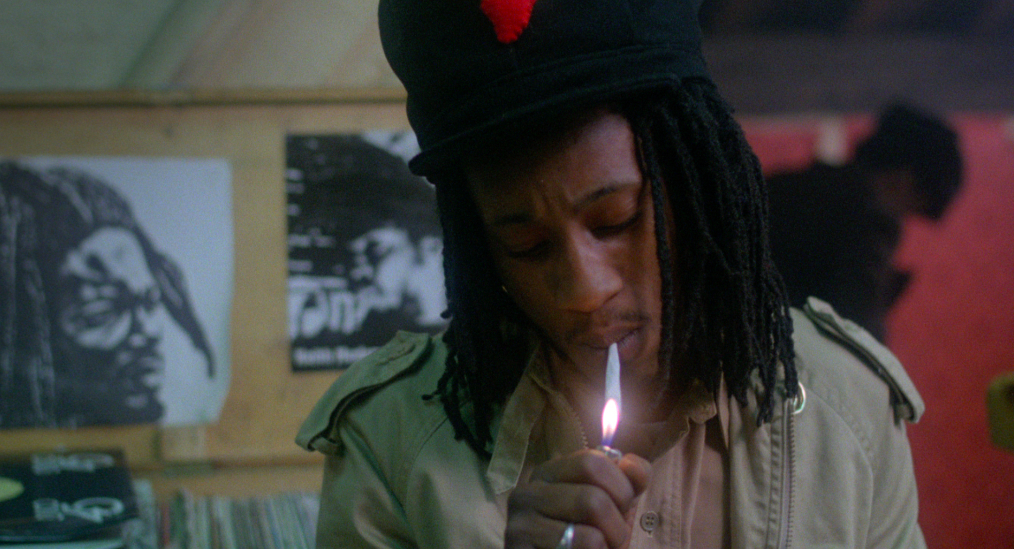
Brinsley Forde as Blue/ Source: Kino Lorber
The experience of being Black and Caribbean in Britain is rich and complex. Seeing these stories on the motion picture screen created and conveyed by the community has not been without its challenges. The recent successes of Steve McQueen’s Small Axe anthology of films for Amazon is the latest to display this multitude of narratives, with Lovers Rock being prominent for its depiction of the reggae scene in 1980’s London. This wouldn’t have been realized without other films paving the way. One stands out for the realistic depictions that led it to the status of a cult classic although it wasn’t seen anywhere for close to three decades after a limited release, and a controversial rating by Britain’s film board. That movie? Babylon.
Released in 1980 and directed by Franco Rosso with Chris Menges handling the cinematography, Babylon is the story of Blue (played by Guyanese-British actor Brinsley Forde), a young man who works as a mechanic by day and fronts the Ital 1 Lion sound system crew in the Brixton neighborhood of South London at night. Blue, like many of his friends in Brixton, is trying to navigate the rigors of being Black in Britain during a time of intense racial conflict with Margaret Thatcher as Prime Minister and the National Front stoking the tensions. Part of this is set on keeping the Ital 1 Lion crew sharp for their soundclash against a rival crew as “toaster”.
The pressure builds up after he loses his job at the garage the catalyst for a downward spiral. Blue gets into it with his stepfather and leaves home after he’s been assaulted and arrested by racist policemen. He wanders the streets trying to find a place to rest his head and incidentally splits up with his girlfriend. The final straw comes when the garage where the crew stores their sound system is harassed by a racist neighbor, and eventually trashed. The anger in Blue boils over and he stabs a neighbor who has an altercation with the crew right before their clash. Blue makes it to the dancehall in time to join them as the film concludes, with the police breaking down the doors to get into the hall.
The film’s resurgence in 2019 also raised a couple of questions – mainly, is it a true depiction of the experiences of the Caribbean community in Britain being that it gained a heavy focus as opposed to other films such as its predecessor, Pressure which debuted four years earlier with a Trinidadian-British director? And does having a white director and cinematographer take away from that, placing it under a white gaze?
Rosso, son of immigrants, lived in the same South London neighborhoods that came to be identified with the Caribbean community that arrived as the Windrush generation. Prior to Babylon, he worked on a documentary of the revered dub poet and activist Linton Kwesi Johnson. The basis for the movie’s plot itself is taken from Barbadian musician Dennis Bovell and his experience of being falsely arrested and imprisoned for running a hi-fi system a few years before. Bovell would also be responsible for the hard-hitting soundtrack to the film along with Forde and his group Aswad’s contributions.
The leader of the other sound crew, Jah Shaka also directed a scene in the film but was uncredited for it. Babylon would serve as a bridge in this respect from Pressure, with the music as a focus but not taking away from other aspects of the Caribbean community. Like the generational divide between those who emigrated to Britain and those born there illustrated in Blue’s relationship with his stepfather. Another shows Blue, in trying to find guidance, arriving at a Rastafarian ceremony held in an out-of-the-way building.
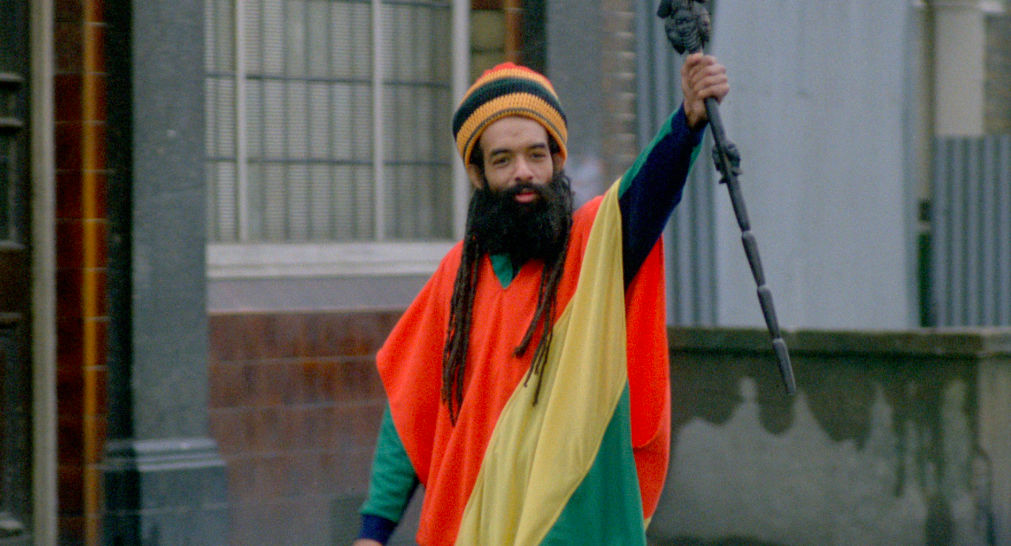
Cosmo Laidlaw as Rastaman/ Source: Kino Lorber
The question of how a white gaze may sway the cultural portrayals in Babylon is complicated to answer by the seemingly true-to-life way that whites are depicted in the film. From Blue’s boss to the profiling by racist policemen, white people on a whole view Black people as troublemakers and suspects. They are always on the margins, waiting to prey on the community. The anger and the wariness of the Caribbean community in response are shown in parts with the character of Beefy (Trevor Laird), who responds to a neighbor’s pointed comment that the neighborhood “was lovely” before “they” arrived thusly: “This is my country lady, and it’s never been fucking lovely!!” Even Blue’s friend Ronnie (Karl Howman), who loves reggae and marijuana, is positioned as an ally that some in the crew can’t fully trust.
The British Board of Film Classification gave the film an “X” rating, putting it in a category with other more violent films even though there are only two scenes that are violent in the film. The ruling restricted a large swath of the public, including the Caribbean community from seeing it on a wider basis. The furor over the rating followed the film as it made its debut at the Cannes and Venice Film Festivals and ultimately forced the New York Film Festival to drop it from its lineup, citing it as “too controversial and likely to incite racial tension” according to Vivian Goldman from Time Out magazine. This, after a decade of the U.S. film industry bringing in Blaxploitation films for the previous decade, including The Harder They Come. This would lead to Babylon not being shown in the U.S. until 2019, ten years after the film was available on DVD in Britain.
Babylon stands out primarily because of its focus on reggae and the art of the sound clash, but also for an unvarnished look at what the Caribbean community in Britain had to endure. It retains its status despite the machinations of a state trying to hide its savage actions against Black Caribbean citizens back then and is one film that can’t be forgotten as more Black British filmmakers with Caribbean backgrounds are creating more of our stories for the motion picture screen.
Babylon is available for streaming on The Criterion Channel.
More on juliemango.tv
Follow juliemango.tv on Twitter, Instagram, and sign up for our newsletter.
