Relatable oppressive realities in four dystopian films
I love dystopian fiction because, more than any other genre, films and novels in this genre have a very satisfying ability to present real life experiences of humans in society that are seldom talked about or acknowledged. Some of my favourite titles in this genre are George Orwell's 1984; The Matrix (1999) credited as being written by The Wachowski brothers but rumoured to have been written by Sophia Stewart; The Hunger Games (2012) based on a novel by Suzanne Collins, which I haven't read - yet; and Jordan Peele's Us (2019). What truths are explored in these four fictional works? Let’s look at a few of the prominent themes that make these fictional works some of my absolute favourites.
1984
Source: YouTube
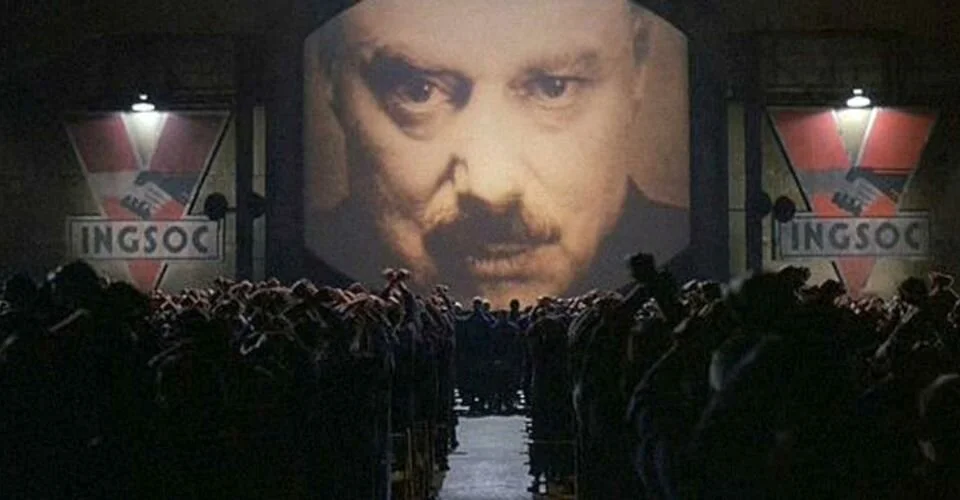
If you listen to Bob Marley, Biggie or Martin Luther King you'll know that law enforcement agents use surveillance techniques to covertly obtain information about people. And if you've ever had a 9 to 5 job you disliked, or had to attend a function you didn't want to, you know that society often requires you to perform behaviours that are contrary to your authentic feelings in order to, for example, stay employed or be perceived and socially acceptable or mannerly. Expand this to a larger scale and we recognise that many people living under oppressive government, religious and other sociopolitical structures experience a daily reality where expressing their truth or expressing any idea other than what is deemed acceptable in the eyes of power has serious repercussions and can lead to punitive measures ranging in severity.
Socially constructed power systems' use of surveillance as a means of control plus the inauthentic performance required to fit into and stay safe in certain segments of society are two themes that George Orwell does a beautiful job of bringing to the forefront in 1984. This is one of those times that I’d recommend reading the book over watching the film. I tried to watch the 1956 movie based on the novel a couple times and couldn't get through it, but it's worth mentioning that the movie exists. I might try to watch the novel's 1980s screen adaptation.
The Matrix

Source: YouTube
I mentioned the rumours about Sophia Stewart having written this movie because I totally believe that this film about living in a system designed to use you as battery power while keeping you in a state of unconsciousness could be based on a Black woman's experience in society. The Matrix does an impactful job of illustrating the concept of spiritual resurrection. That is, the concept of living under conditions that cause suffering, which you can free yourself from if you just awaken to the power you have inside of you. It is a truth exemplified through Jesus Christ, Horus in Egyptian mythology and modern day mindfulness practices. The Matrix illustrates spiritual resurrection through its fictional narrative mirroring a real life truth, which is that every aspect of our human experience suggesting you have to relinquish your destiny to outside forces that control you is illusory. You control your destiny if you learn to control your mind. Remember when Neo effortlessly fights off the agents? What a perfect metaphor for the effortless release from suffering that comes from mindfulness. We could say Neo reaches a metaphoric action movie Nirvana in the film’s climax. Namaslay dem agents bishes!
The Hunger Games

Source: Tubi
I think anybody who wasn't born filthy rich and gets an opportunity to ascend the social ladder can relate to this movie. The themes of unequal distribution of wealth based on geography are also very relatable to Caribbean folks and to the global south in general (i.e. developing and underdeveloped nations). What about the people you may have to leave behind when you move up the social ladder? What do the gatekeepers who hold access to wealth and power expect you to do to earn your social ascension? Do you have to compete with and even kill the other people aiming to ascend alongside you to win the opportunity to improve your life?! Why does social ascension in typical capitalist structures seem to require you to perform absurd smile and wave theatrics and conform to an a la mode fashion-centric presentation of self for the pleasure and entertainment of others while fighting to survive? Hunger Games is an epic exploration of all these very true-to-real-life experiences. Love this movie.
Us
Source: Monkey Paw Productions
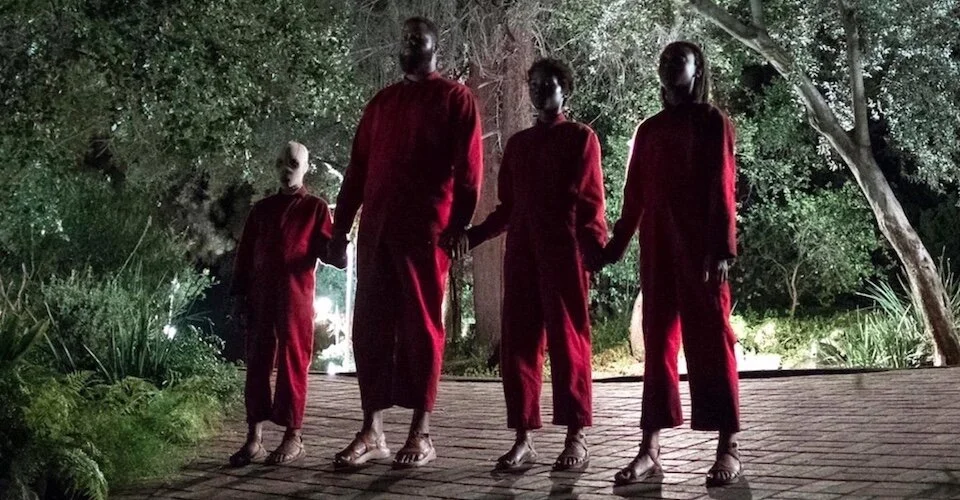
Most recently, Jordan Peele's Us showed me another societal truth that is very rarely articulated. That is, people with privilege consciously and/or unconsciously systemically use their power in ways that keep humans with less privilege underground and resource-deprived while those aboveground ( with privilege ) mirror and exploit aspects of the underground individuals’ talents, ideas, experiences, expressions and identities. What happens if the two worlds (underground and aboveground) meet? Privilege won't go down without a fight. Jordan Peele is the GOAT. His exploration of this truth through Us makes this movie a very satisfying cinematic experience. The novel Never Let Me Go by Kazuo Ishiguro explored similar themes, I really enjoyed that book so I feel compelled to drop the title into this conversation. There’s a 2010 movie based on Ishiguro’s novel that’s worth the watch.
Reggae music is another artistic genre that explores all these types of seldom spoken truths with a poignance and accuracy that makes my soul say YES. The relationship in my mind between reggae and dystopian sci-fi makes me excited for the potential for an increased output of Caribbean cinematic products in this genre. Riveting dystopian fiction podcasts like Wallflowers by Trinbagonian Thomas Jemmerson further whet my appetite for visuals to take these types of gripping reflections on real life social ills to the screen. I feel like these types of fictional products are a good fit for examining Caribbean cultural perspectives while imagining bright and better futures for ourselves where we boldly and bravely overcome conditions that have historically held us back. I'm all for sharing truths, advocating for human rights and presenting visions of positive change in any and every form. The films we looked at in this post prove that cinematic fiction may be one of the most effective ways to achieve these goals. Real talk. Reel talk.